Your customers are already searching, scrolling, and comparing options online. The challenge is reaching them through the right channel at the right moment. What are the 4 types of digital marketing? Four of the main types are search engine optimization, pay-per-click advertising, social media marketing, and content marketing. While digital marketing includes other channels, these four are widely used to support goals ranging from brand awareness to qualified leads and sales. Understanding their benefits helps businesses invest more effectively.
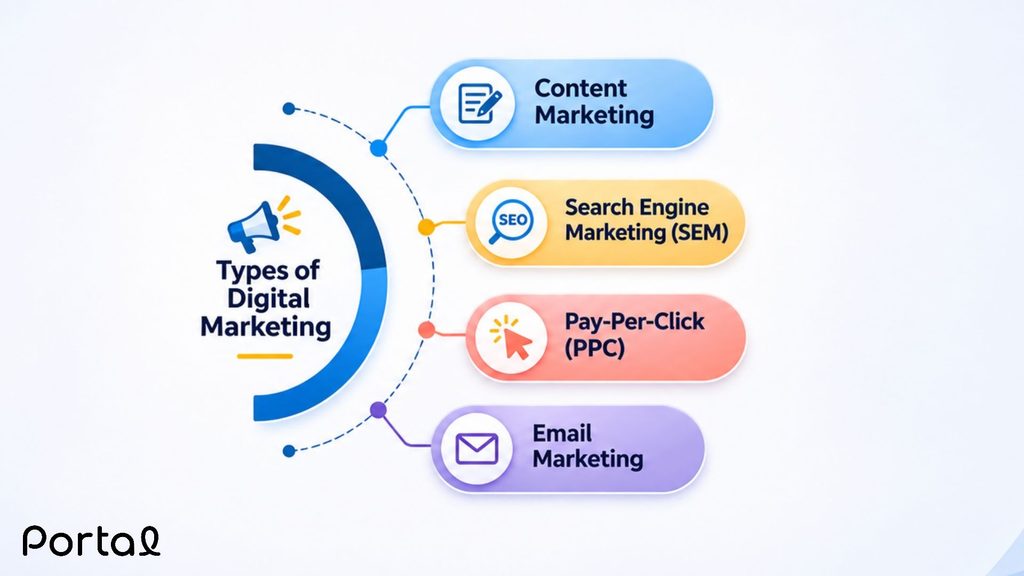
What Are the Main 4 Types of Digital Marketing?
The four types of digital marketing help businesses become discoverable, reach targeted audiences, build trust, and encourage action. They can work independently, but their value increases when each channel has a clear role within one strategy.
1- Search Engine Optimization (SEO)
Search engine optimization improves a website’s visibility in unpaid search results. It uses keyword research, search intent, useful content, technical performance, website structure, internal links, and external authority.
Its main benefit is attracting organic traffic from people already searching for related information, products, or services. Strong pages can continue generating relevant visits and leads without paying for every click.
For example, a dental clinic can create treatment pages and answer common patient questions to reach local searchers. SEO takes time, so businesses should measure qualified traffic, inquiries, conversions, and revenue rather than rankings alone.
2- Pay-Per-Click Advertising (PPC)
Pay-per-click advertising places paid ads on search engines, social platforms, websites, or apps. Businesses control the audience, location, budget, schedule, offer, and landing page.
PPC is valuable when a campaign needs fast visibility, targeted traffic, or immediate lead generation. It works well for launches, limited offers, high-intent searches, and remarketing, but results usually depend on continued media spend.
For example, a maintenance company can show an emergency plumbing ad only within its service area. Judge performance by lead quality, conversion rate, cost per lead, return on ad spend, and revenue—not clicks alone.
3- Social Media Marketing
Social media marketing uses platforms such as Instagram, Facebook, LinkedIn, TikTok, and YouTube to reach and communicate with audiences. It includes organic content, community management, customer support, influencer partnerships, and paid campaigns.
It covers both organic and paid activities, while PPC is a pricing model in which advertisers pay for each click. This means the two can overlap when social media ads use PPC pricing.
Its main value is building brand awareness, trust, and engagement before customers are ready to buy. The right platform depends on the target audience and the content they prefer.
A fashion brand may use styling videos and customer photos, while a B2B company may share LinkedIn insights and webinars. Measure results through website visits, qualified leads, conversions, and retention—not reach and engagement alone.
4- Content Marketing
Content marketing creates useful information that answers questions, demonstrates expertise, and supports customer decisions. Formats include articles, guides, videos, case studies, reports, newsletters, webinars, and downloadable resources.
It matters most when customers need education or proof before a complex or high-value purchase. One strong resource can support SEO, social media, email, paid promotion, and sales conversations.
For example, an accounting firm can publish a tax guide, offer a checklist, and invite readers to book a consultation. Measure performance through engagement, downloads, qualified leads, assisted conversions, and sales.
Comparison of the 4 Types of Digital Marketing
The main 4 types of digital marketing differ in speed, cost, audience intent, and long-term value. The table below compares the role of each one.
| Type | Time to See Results | Primary Benefit | Best Used For | Main Limitation |
| SEO | Usually several months | Sustainable organic visibility | Long-term discovery, local search, and high-intent demand | Requires time and continuous improvement |
| PPC | Immediate once campaigns launch | Fast, targeted traffic | Launches, offers, remarketing, and lead generation | Results depend on budget and optimization |
| Social media marketing | Weeks to months; paid campaigns can be faster | Awareness and engagement | Brand discovery, community building, and customer communication | Reach and algorithms can change |
| Content marketing | Usually several months | Trust and authority | Education, lead nurturing, and supporting SEO | Requires consistent quality and distribution |
SEO and PPC often reach people with existing search intent, while social media can create interest before they begin searching. Content marketing supports all three by providing useful information to attract, educate, and convert audiences. No type is automatically best; the right choice depends on the business objective and customer journey.
How Do the Four Types of Digital Marketing Work Together?
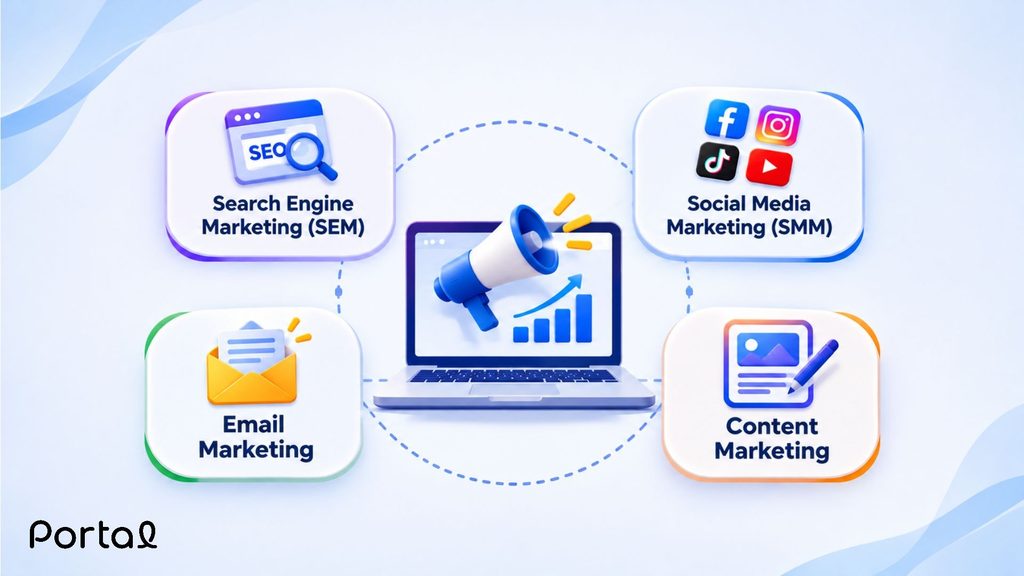
The four types work best as a connected system rather than separate activities. Content marketing creates useful assets. SEO helps those assets appear in search. Social media distributes them and builds interaction. PPC gives priority pages or offers immediate targeted reach.
For example, a software company may publish a guide about a common business problem and optimize it for search. The company can share its key insights on LinkedIn and use paid ads to reach selected decision-makers.
Information from one channel can also improve the others. PPC search terms may reveal valuable SEO topics, while social comments can identify customer questions for future content.
High-performing articles can become videos, webinars, ads, or sales resources. Pages that convert well through organic traffic may also work as paid landing pages.
Integration does not mean giving every channel the same budget or publishing the same message everywhere. Each channel needs a defined role, suitable format, consistent brand message, accurate tracking, and a clear next step.
Bringing these channels together requires a clear plan and consistent execution. Working with a digital marketing agency can help businesses coordinate SEO, paid advertising, social media, and content marketing around shared goals.
How to Choose the Right Digital Marketing Channels for Your Business
Define Your Business Goals
Start with the outcome you want to achieve. PPC may be the priority for immediate leads, while SEO supports lasting visibility when customers actively search for your services.
Social media is valuable for visual discovery, brand awareness, and community building. Content marketing is essential when customers need information and guidance before making a decision.
Understand Your Audience
Identify where your target audience searches, which platforms they use, what questions they ask, and what prevents them from buying. You should also consider how long their decision-making process takes.
For businesses targeting customers in Saudi Arabia, audience research should also consider local search behavior, language preferences, and differences between cities. A service provider in Riyadh, for example, may need a different approach from an online retailer serving customers across the Kingdom.
Consider Your Budget and Timeline
PPC can generate traffic quickly but requires ongoing spending. SEO and content marketing usually take longer, but they build reusable content and sustainable organic visibility.
Social media requires consistent content and audience interaction. Choose the digital marketing channels your business can manage effectively instead of maintaining weak activity across every platform.
Finally, connect every channel to a relevant conversion path. An ad, post, or article should lead to a page that continues the same message and provides a clear action.
Track lead quality, conversion rate, acquisition cost, customer value, and revenue so decisions are based on business impact rather than traffic or engagement alone.
Find the Right Digital Marketing Strategy for Your Business
Choosing between SEO, PPC, social media, and content marketing depends on your goals, audience, and budget. A clear strategy helps you focus on the channels that can deliver the most value.
At The Portal Agency, we help businesses connect SEO, paid advertising, social media, and content marketing through strategies built around their goals and target audiences.
Frequently Asked Questions about the 4 Types of Digital Marketing
Is email marketing one of the main types of digital marketing?
Yes. Email helps nurture leads, distribute content, share offers, and retain customers. It often supports SEO, PPC, social media, and content marketing.
What is the difference between SEO and PPC?
SEO gradually builds unpaid search visibility and organic traffic. PPC buys immediate placement and offers faster control, but its traffic normally depends on continued spending.
Which type of digital marketing is best for small businesses?
The best option depends on customer behavior and goals. Local services often benefit from SEO and search PPC, while visual brands may prioritize social media and content marketing.
Can a business use all 4 types of digital marketing?
Yes. The four types can support one another, but each should have a clear role. Businesses should expand gradually instead of spreading their budget and team too thin.
Which digital marketing type delivers the fastest results?
PPC usually provides the fastest visibility and traffic because campaigns can run shortly after setup. Profitable results still depend on accurate targeting, strong messages, relevant landing pages, and conversion tracking.