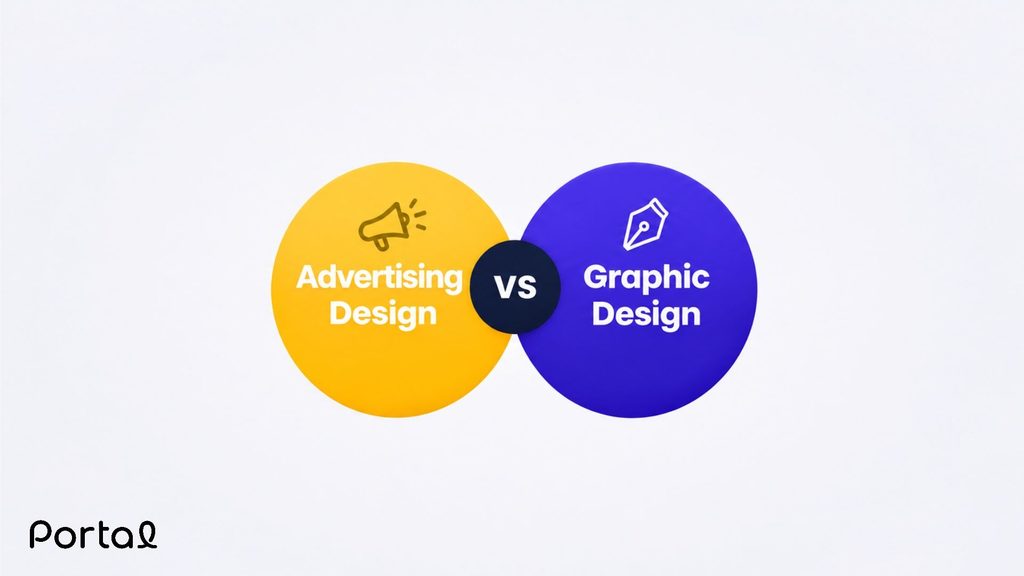
Advertising design vs graphic design can look similar because both use typography, imagery, color, and layout. The main difference is purpose. Advertising design promotes an offer and encourages a defined audience to respond, while graphic design covers a wider range of visual communication needs. The following sections compare their goals, audiences, deliverables, and creative processes, with practical examples to help businesses choose the right service.
What Is Advertising Design?
Advertising design is the creation of visual content that promotes a product, service, offer, or campaign. Its purpose is to attract attention, communicate a persuasive message, and encourage a specific audience to take action.
Effective advertising design combines a clear objective, audience insight, headline, imagery, color, typography, layout, brand identity, and call to action. These elements work together to support the campaign goal across different media formats. For a broader explanation of the field, read our guide to What Is Advertising Design.
What Is Graphic Design?
Graphic design is the broader practice of using visual elements to communicate information and ideas. It supports commercial, educational, cultural, editorial, digital, and organizational needs.
A graphic designer may create logos, brand guidelines, packaging, publications, infographics, signage, presentations, and website interfaces. Depending on the project, the goal may be recognition, clarity, usability, information, or long-term consistency rather than an immediate response. Both fields rely on visual communication, but they apply it to different objectives.
Advertising Design vs Graphic Design: Key Differences
Advertising design is a specialized part of graphic design. The distinction becomes clear when comparing goals, audiences, deliverables, and processes.
Purpose and Goals
Advertising design supports objectives such as awareness, product launches, promotions, lead generation, or sales. Its success depends on clear messaging and the desired response.
Graphic design serves wider goals. A logo builds recognition, packaging identifies a product, a report organizes information, and signage supports navigation. These are not necessarily advertisements.
Target Audience and Messaging
Advertising starts with a defined audience. The designer identifies what it values, which problem the offer solves, and what action should follow. The message then fits the audience and channel.
Graphic design also considers the viewer, but the message may be informational rather than persuasive. An annual report should make data readable, while a wayfinding system should help visitors reach the correct place.
Types of Projects and Deliverables
Advertising design produces campaign assets such as paid social ads, outdoor advertising, banners, print advertisements, promotional posters, email campaigns, and product launch materials. These assets usually carry a defined offer or message and may run for a limited period.
Graphic design examples include logos, stationery, packaging, publications, menus, data visualizations, signage, interfaces, and presentation templates. Many support long-term brand communication.
The same format may fit either category. A social post sharing general brand information is graphic design. A paid post promoting a seasonal offer with a call to action is advertising graphic design. Purpose matters more than the platform.
Creative Process and Strategy
Advertising work begins with a brief covering the objective, audience, offer, message, channels, formats, and call to action. The team develops a key visual, adapts it, and may test several versions.
A graphic design process begins with the communication problem, audience, content, brand, format, and production needs. The designer creates concepts, develops the visual system, and prepares the final application.
Strategy matters in both. Advertising design connects closely to marketing, media placement, copywriting, timing, and campaign performance. Graphic design may focus more on brand systems, information hierarchy, usability, production, and consistency.
Examples of Advertising Design and Graphic Design
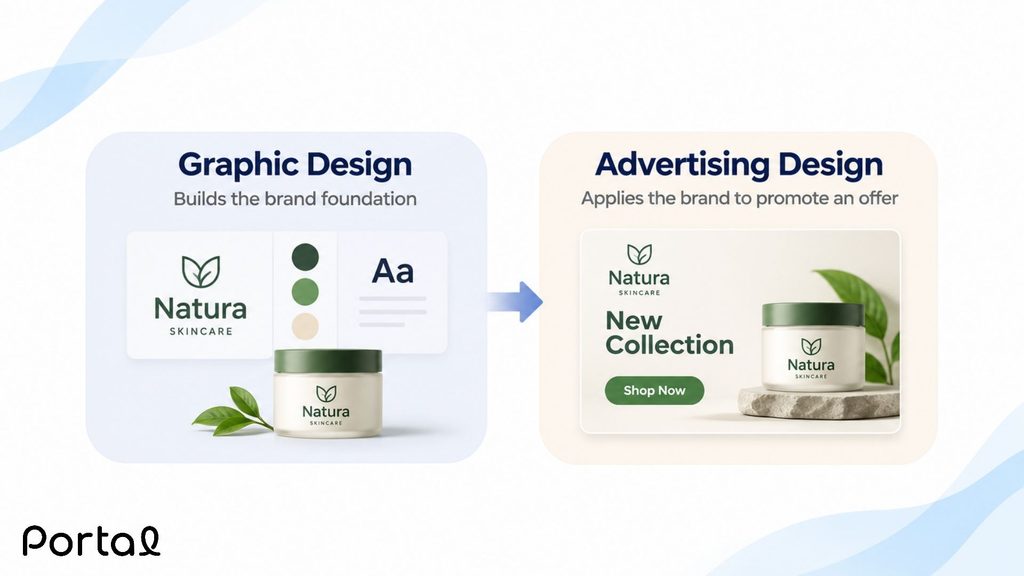
Advertising design examples can show the distinction clearly. A skincare launch may include an Instagram ad, website banner, magazine advertisement, and retail display using one campaign image and product benefit. A restaurant promotion may use paid social ads, outdoor posters, email graphics, and a limited-time offer page. Each asset promotes something and encourages a response.
Graphic design examples for the same businesses would include the skincare brand’s logo, packaging system, product icons, and guidelines, or the restaurant’s identity, menu, packaging, and signage. These materials support the brand even when no campaign is active.
A business often needs both. Graphic design creates the visual foundation, while advertising design applies it to campaign messages and promotional formats.
How Do Advertising Design and Graphic Design Work Together?
Advertising works best when it is built on a clear graphic design foundation. Brand guidelines give the campaign team approved colors, typography, logo rules, imagery, and visual principles. This makes every advertisement recognizable even when the campaign concept changes.
Campaigns can also introduce new photography, illustration, motion, or messaging that later influences the wider brand system. These additions should be reviewed so the identity remains consistent.
In practice, marketers define the campaign objective, audience, and offer; copywriters turn them into a clear message; and designers express that message using the brand’s approved colors, typography, imagery, and layout. Reviewing the assets together keeps the visual identity consistent across channels and ensures that every design communicates the same campaign message clearly.
Which Type of Design Does Your Business Need?
Start with graphic design when the business lacks a clear, recognizable visual identity. If customers see inconsistent colors, typography, logos, or materials across different touchpoints, the priority is to create a visual system that makes the brand look unified and credible.
Choose advertising design when the brand identity already exists, but the business needs to promote a specific product, offer, service, or launch. The priority is then to turn the campaign objective into a focused message and creative concept that attracts the right audience and encourages action.
A company starting from zero will usually need both. Graphic design establishes the identity first, while advertising campaign design uses that identity to introduce the business and promote its offers. An established company may only need creative advertising design for a new campaign, with limited graphic design support to keep every asset consistent.
When comparing an advertising designer vs graphic designer, focus on the business problem rather than the title. Review the designer’s portfolio, strategic thinking, audience understanding, and ability to work within the brand. One designer may cover both areas, while complex projects may require specialists.
Frequently Asked Questions about Advertising Design vs Graphic Design
What is advertising design?
Advertising design creates visual campaign materials that promote a product, service, offer, event, or brand. It combines visuals, copy, layout, and calls to action to support a marketing objective.
What are the four types of graphic design?
Four common categories are brand identity design, marketing and advertising design, publication design, and digital or interface design. Other areas include packaging, environmental design, motion graphics, and information design.
Does graphic design fall under advertising?
No. Graphic design is the broader field. Advertising uses graphic design as a communication tool, but graphic design also serves branding, packaging, publications, interfaces, signage, and other purposes outside advertising.
Is Advertising Design a Type of Graphic Design?
Yes. Advertising design is a specialized type of graphic design focused on promotional messages, campaign goals, target audiences, and actions such as buying, registering, or making an inquiry.
Is Social Media Design Considered Graphic Design or Advertising Design?
It can be either. An organic brand post may be general graphic design, while a paid post promoting an offer is advertising design. The classification depends on the purpose, message, placement, and desired action rather than the platform alone.