Web design vs. web development: what’s the difference? Web design defines how a website looks and guides users, while web development makes it work. This guide explains their responsibilities, deliverables, key differences, and whether your project needs a designer, a developer, or both. It also shows how both roles work together throughout a successful, efficient, and well-planned website project.
What Is Web Design?
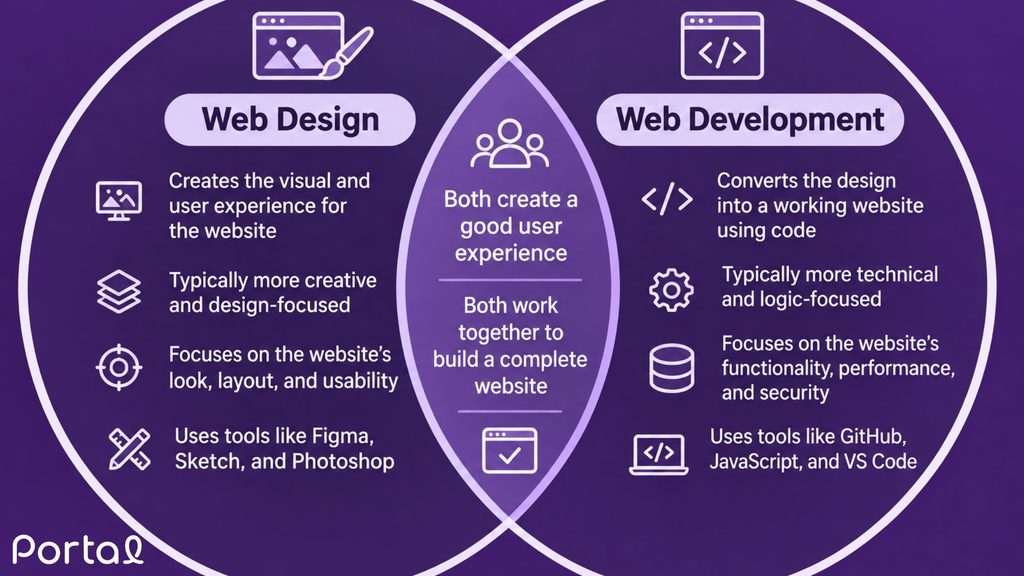
Web design is the process of planning a website’s appearance, structure, and user experience. It covers how information is presented, how visitors move between pages, and how easily they can understand the content and take action. A web designer may create the sitemap, wireframes, prototypes, visual system, and responsive layouts to make the website clear, accessible, consistent with the brand, and easy to use across devices.
The web design process begins with understanding the business, audience, objectives, content, competitors, and user journeys. Professional web design services then turn these insights into a clear site structure, visual direction, responsive interface, and tested user experience.
Key Elements of Web Design
Effective web design brings several elements together:
- Layout and hierarchy: Organize content and show users what to notice first.
- Typography and color: Support readability, meaning, and brand consistency.
- Navigation: Helps visitors find information without confusion.
- Responsive design: Adapts pages to desktop, tablet, and mobile screens.
- User experience and accessibility: Reduce friction and make interactions easier for more people.
A polished interface can still fail if users cannot find information or know what to do next. Successful web design balances appearance, usability, and business goals.
What Is Web Development?
Web development is the technical process of building, operating, and maintaining a website or web application. Developers use programming languages, frameworks, databases, content management systems, and other tools to make the approved design function correctly.
Development may include building components, connecting forms, managing content, integrating payments, securing data, and ensuring reliable performance across browsers and devices.
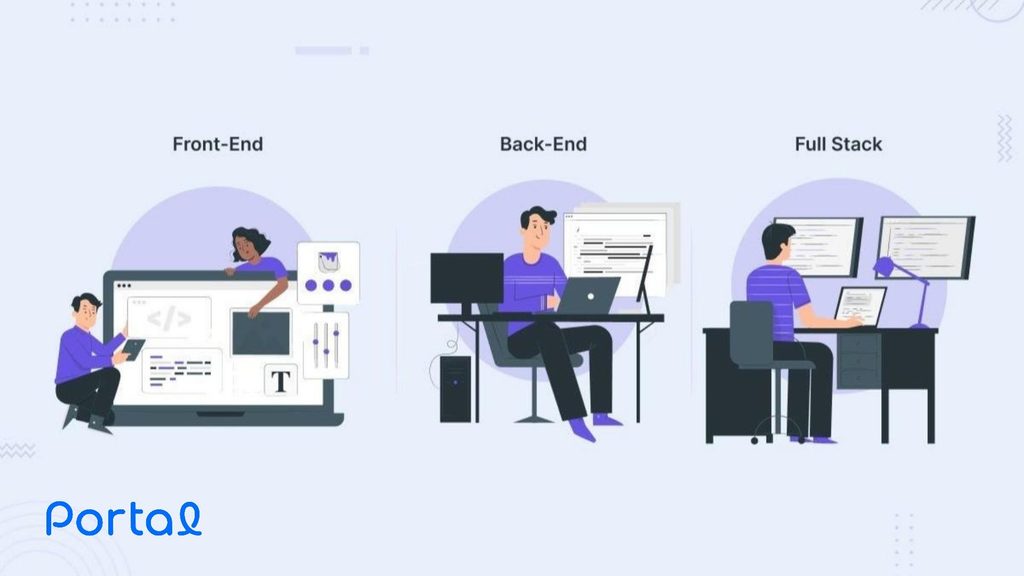
Web development is commonly divided into front-end, back-end, and full-stack development.
Front-End Development
Front-end development covers the part of the website that users see and interact with in their browser. Front-end developers translate approved designs into working pages using technologies such as HTML, CSS, and JavaScript.
They build menus, forms, animations, responsive layouts, and reusable components. Front-end work connects visual design with actual user interaction.
Back-End Development
Back-end development manages the systems working behind the interface. It may include servers, databases, application logic, authentication, permissions, content management, and connections to third-party services.
When a customer submits a form, creates an account, or completes a purchase, the back end processes that information. Back-end developers focus on security, data accuracy, and performance.
Full-Stack Development
Full-stack development combines front-end and back-end responsibilities. A full-stack developer can work on the visible interface and the technical systems behind it.
This can suit smaller websites or teams that need one developer across several technical areas. Complex platforms may still require specialists in front-end development, back-end development, databases, security, or infrastructure. Full-stack development does not mean one person handles every design and technical task.
Web Design vs. Web Development: Key Differences
The central difference between web design and web development is their responsibility: design defines the experience, while development builds the technology that delivers it.
| Comparison Point | Web Design | Web Development |
| Primary focus | User experience, visual direction, and communication | Functionality, performance, and technical operation |
| Main responsibilities | Content hierarchy, layouts, branding, navigation, and usability | Code, databases, integrations, security, and system performance |
| Common tools | Wireframing, prototyping, and interface design tools | Code editors, programming languages, frameworks, databases, and testing tools |
| Typical deliverables | Sitemap, wireframes, responsive layouts, prototypes, and design system | Working website, functional components, integrations, and content management setup |
| Project timing | Mainly begins before coding and continues through design reviews | Becomes central during the build and continues after launch through maintenance and updates |
Problems solved | Communication, clarity, accessibility, and ease of use | Technical function, reliability, data handling, and scalability |
How Do Web Designers and Web Developers Work Together?
Successful web design and development should be collaborative from the beginning. If designers create layouts without understanding technical limits, the final website may be slow, difficult to maintain, or expensive to build.If developers start coding without a clear design and content structure, the website may function but feel inconsistent or confusing.
The team should agree on objectives, users, sitemap, content, features, budget, and timeline. Designers can then create prototypes while consulting developers about feasibility, accessibility, responsiveness, and performance.
Before development, the designer provides layouts, component states, typography, assets, and mobile behavior. During the build, the designer reviews implementation and the developer recommends technical adjustments. Testing covers navigation, forms, responsiveness, speed, accessibility, and browser compatibility.
Clear handoff documentation keeps this collaboration efficient. It should explain responsive behavior, interactive states, reusable components, image requirements, and any content that may change. Developers should also raise technical limits early so the team can adjust the solution before time is spent building it.
This shared process reduces rework without sacrificing performance or usability.
Do You Need a Web Designer, a Web Developer, or Both?
The right choice depends on the business problem behind the project. A company should first identify whether customers are struggling with the experience, the website is failing technically, or both issues are affecting results.
When You Need Web Design
You need web design when visitors cannot understand the offer, find important information, complete a form, or move easily between pages. Other warning signs include high drop-off on key pages, confusing navigation, unclear calls to action, poor mobile usability, or a website that no longer represents the brand.
For a business owner, the issue is not simply that the website looks outdated. The real question is whether the design is making it harder for potential customers to trust the business, explore its services, or take the next step. Wireframes and prototypes can test the improved experience before development costs increase.
When You Need Web Development
You need web development when the experience is clear but the website does not function reliably. Examples include slow loading, broken forms, payment errors, failed integrations, security problems, limited content management, or features that do not work correctly across devices.
A developer can repair these problems, build approved designs, add custom features, connect third-party systems, and manage updates, security, backups, and technical maintenance.
When You Need Both
Most new websites and major redesigns need both. The designer defines the customer journey and interface, while the developer turns them into a reliable, responsive, and maintainable website. This collaboration is especially important for e-commerce, memberships, booking systems, multilingual websites, and custom products.
Choosing one specialist as the main lead does not remove the other role completely. A design-focused project may still need a developer to confirm feasibility or implement changes. A development-focused project may need a designer to improve a form, user flow, or interface affected by the technical work. The required level of involvement depends on the problem, but coordination prevents one solution from creating a new issue elsewhere.
Bring Web Design and Development Together
A successful website needs both a clear user experience and reliable technical performance. At The Portal Agency, we bring design and development together to build websites that support your business goals.
Frequently Asked Questions about web design and web development
Which is best, a web designer or a web developer?
Neither is better because they serve different roles. Choose a designer for appearance and user experience, a developer for functionality, or both for a complete website.
What is the difference between development and design?
Design plans how a website looks and guides users. Development uses code and technical systems to make it function.
Does Web Design Include Web Development?
No. Web design plans the experience and interface, while web development builds the working website. Some agencies provide both services.
Can You Build a Website Without Coding?
Yes. No-code website builders can create simple websites and landing pages. Custom features, complex integrations, or advanced performance may still require a developer.