
Website copy or design first is one of the earliest decisions in any website project. In most cases, the message should come first: define what the business offers, who the website is for, and what visitors should do next before finalizing the layout. This article explains when to use a copy first approach, when a design first approach may be appropriate, and how website copy and design can work together to create a clear, useful, and conversion-focused website.
Why Starting With Website Copy Often Works Better
Starting with website copy before design gives the project a clear communication structure. The designer knows which message deserves the most attention, what information users need, and which action each page should encourage. Instead of designing empty sections and filling them later, the team builds every section around a real purpose.
Good website copywriting includes headlines, service descriptions, navigation labels, calls to action, forms, and FAQs. Planning these elements early allows the layout to support them properly.
A copy before design process also improves visual hierarchy. The designer can identify the main benefit, proof points, and call to action, then use typography, spacing, imagery, and color to direct attention.
Using real content prevents avoidable revisions. Longer final copy can break a layout built around placeholders and force the team to rebuild sections. Realistic copy makes the scope and page length clear early.
This approach also supports search visibility. A strong website content strategy assigns each page a topic, search intent, main keyword, related terms, and customer questions. The designer can then provide enough space for useful content without creating a crowded page.
The copy need not be final before design begins. Approve the page purpose, core message, hierarchy, and approximate length, then refine the wording with the design.
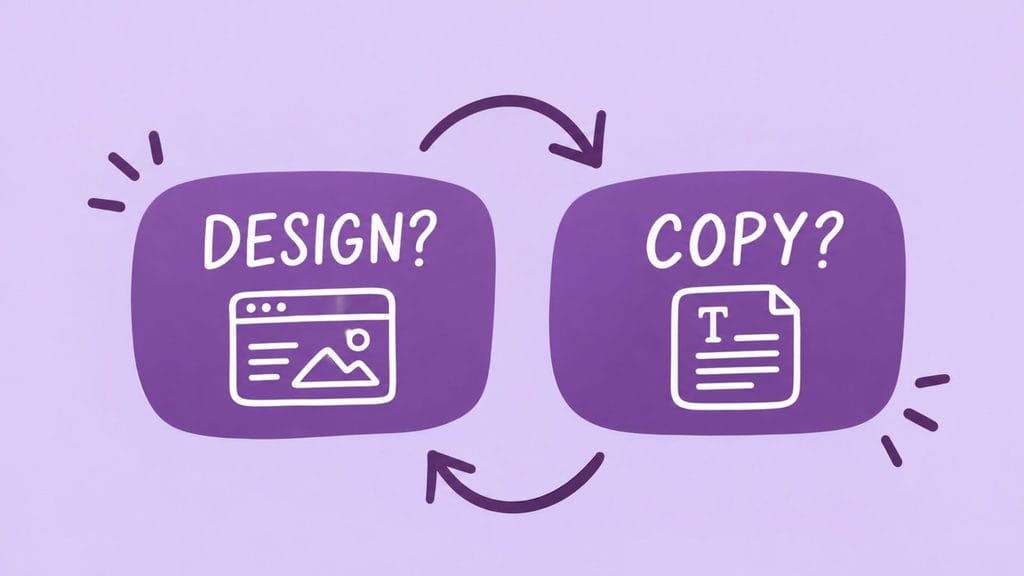
When Does Website Design Come First?
A design first approach can work when the visual or interactive experience is central. Portfolios, campaign microsites, and digital products may need an early prototype to show how users will explore the content.
Starting with design does not mean ignoring content. It means visual exploration begins before every sentence is finalized. The team still needs a clear objective, audience, core message, realistic text length, and call to action to guide the layout.
Design may also lead when a company has approved content or a tested template. The task then becomes presenting known information effectively rather than developing the message from scratch.
Early visual exploration can help stakeholders agree on art direction, photography, animation, and brand personality while the copy is refined in parallel.
How Website Copy and Design Work Together
Strong web design and copywriting solve one communication problem from two directions. Copy explains the offer, answers questions, builds trust, and encourages action. Design organizes that information and makes it easy to scan, understand, and remember.
Copy should influence the format. A benefit may need a bold headline, a process may work as clear steps, and customer proof may appear as a testimonial, case study, or measurable result.
Design can improve writing. A focused hero encourages a sharper headline, a mobile screen exposes long sentences, and a comparison layout turns vague claims into specific differences.
Effective website copy and design require collaboration. The copywriter explains message priority, the designer improves presentation, the SEO specialist checks search intent, and the developer ensures the structure works across devices.
Working with a professional Web Design & Development Company can help bring copy, design, and technical execution together in one cohesive website experience.
A Practical Workflow for Website Copy and Design
The best website design process allows strategy, copy, and visual design to inform one another without creating delays.
Define the objective and audience
Define what the website must achieve, who it serves, and the main action visitors should take.
Plan the sitemap and user journey
List the required pages, organize them around user needs, and give each page a distinct purpose.
Build the website content strategy
Map each page’s topic, search intent, supporting keywords, questions, proof, and conversion goal. This reduces duplication and keyword competition between pages.
Write the core copy
Draft the headline, value proposition, essential sections, evidence, and calls to action. It should contain real information and the approximate length the design must support.
Create content-led wireframes
Turn the content hierarchy into a wireframe showing information order, required visuals, and conversion points. This exposes missing or repeated content.
Develop the visual design
Apply the brand through typography, color, imagery, spacing, and interaction. Help visitors find the main message and move through the page on desktop and mobile.
Refine copy and design together
Review the page in context. Clarify unnecessary copy and adjust the design when an important message needs more space or emphasis.
Test the final website
Check navigation, readability, mobile behavior, accessibility, forms, headings, metadata, and calls to action. Visitors should understand the offer and know what to do next.

Common Mistakes When Planning Website Copy and Design
The most common mistake is keeping placeholder text until the final stage. It cannot represent the real hierarchy, meaning, tone, or length of a page.
Another mistake is forcing copy into approved boxes. This creates vague headlines, missing explanations, and calls to action without context. The layout should support the message.
Teams also lose time when copywriters and designers work separately. Copy may fail inside a mobile layout, while a polished design may leave no room for essential answers.
Copying a competitor’s website is another weak shortcut. You can study competitors to understand common user expectations, content gaps, and market language, but don’t copy a website design. The structure may not suit your audience or offer, and directly imitating it can raise brand and copyright concerns.
Finally, keyword stuffing can damage both clarity and trust. SEO keywords should appear naturally in relevant sections. The priority is to answer the searcher’s question clearly, not repeat the same phrase in every paragraph.
Build a Website Where Copy and Design Work Together
At The Portal Agency, we bring content strategy, website design, and development together to create websites that communicate clearly and support your business goals. Whether you’re building a new website or improving an existing one, our team can help you plan a better experience from the start.
Explore our web design and development services to get started.
Frequently Asked Questions
What does website copy mean?
Website copy is the written content across a website that explains a business, product, or service and guides visitors toward an action. It includes headlines, body copy, service descriptions, product details, calls to action, navigation labels, forms, and FAQs. Effective website copy is clear, relevant to the audience, consistent with the brand, and structured for search intent.
Does all website copy need to be finished before design starts?
No. The core message, page structure, and approximate text length should be clear first. Designers can then start with realistic draft copy while the final wording is refined.
What is the first stage of designing a website?
The first stage is discovery and planning. Define the website objective, target audience, user needs, core message, sitemap, content requirements, and desired actions before developing the final visual design. Colors and layouts should follow this foundation.